Following a relatively quiet Day 1 for fantasy position players, business picked up during the second and third rounds. 11 receivers were selected on Friday night including seven in the second round alone, and they were joined by six running backs, six tight ends, and two quarterbacks. Even so, the biggest story of the night involved a quarterback who was drafted last year.
It Was Mutual
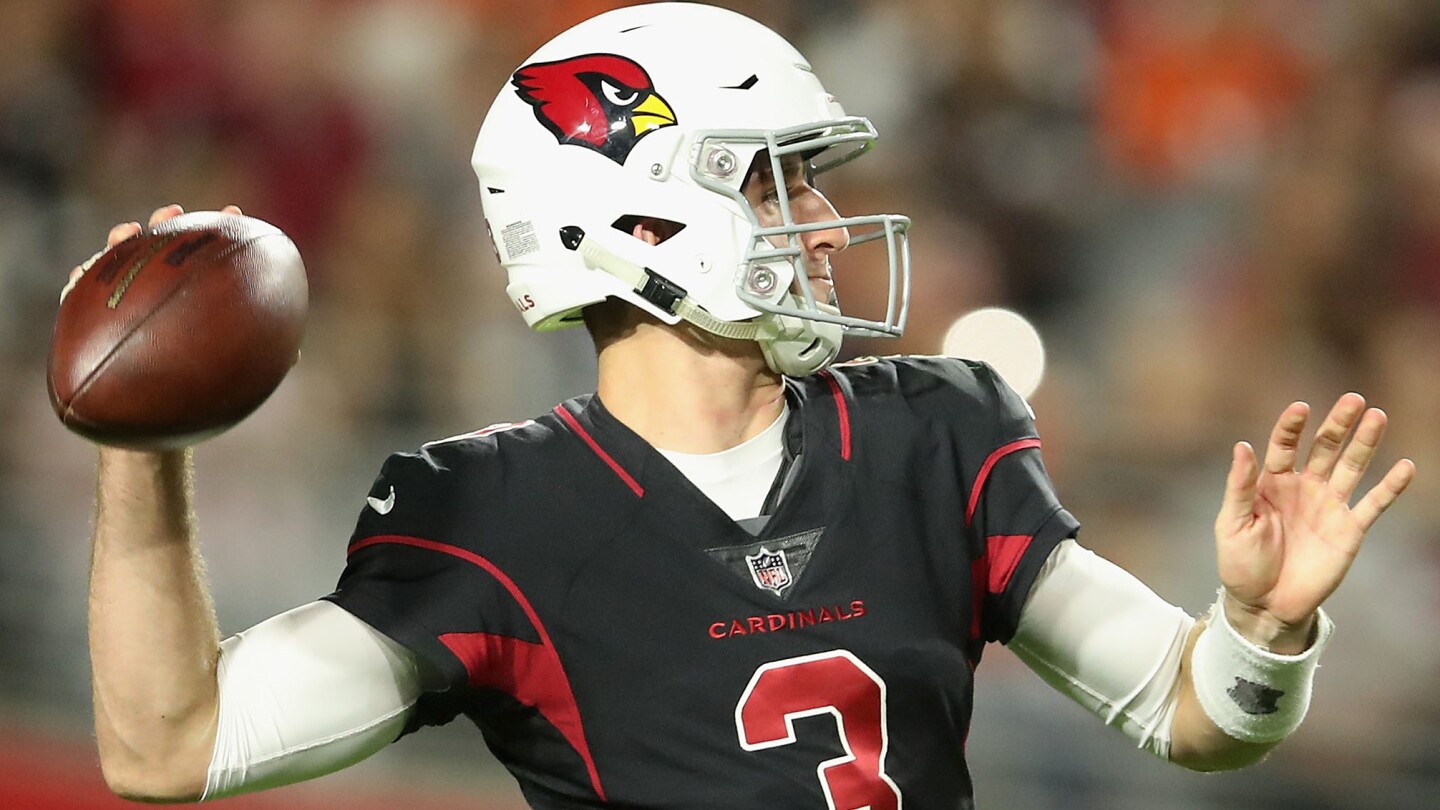
The worst kept secret in football was Arizona’s plan to draft Kyler Murray No. 1 overall, and the second-worst kept secret was their desire to trade 2018 No. 10 overall pick Josh Rosen. The Cardinals surprisingly waited until after Murray was selected – and Rosen unfollowed the team on all social media platforms – to make the deal, but it finally got done late in the second round. Arizona ended up with the No. 62 overall pick, which they used on dynamic receiver Andy Isabella, and a 2020 fifth while the Dolphins got back a first-round sophomore who is under cheap team control for the next three seasons. Rosen will almost certainly start over free-agent addition Ryan Fitzpatrick, allowing Miami to see if Rosen can be the answer or if they need to invest in what appears to be a good quarterback class in 2020. It is tough to see this as anything but a great move by the Dolphins, who are finally showing signs of being a well-run franchise.
The Broncos also did well to land a possible long-term quarterback of their own. Despite literally everyone in the football world knowing John Elway loves Drew Lock, Denver resisted the urge to pick him in the first round, instead trading down before adding TE Noah Fant. The decision to wait was a good one. Although they had to trade up to get him – Denver ended up picking back-to-back in the second round – the Broncos were able to land Lock while still adding a couple of high-end prospects to their offense. An erratic thrower who struggled under pressure in college, Lock is far from a sure thing and very well could bomb out of the league, but his upside is worth the lowered risk in the second round.
[[ad:athena]]
A Receiver Run
Depth is the strength of this receiver class, so it was not a big surprise only two were drafted on Day 1 including N’Keal Harry with the final pick of the first round. For the same reason, it was equally unsurprising to watch 11 come off the board on Friday night including seven in the second round. The 49ers got things started with Deebo Samuel at No. 36 overall – they also added running-back-turned-receiver Jalen Hurd in the third round – but the real run did not start until late in the second. From Tennessee’s selection of A.J. Brown at No. 51 overall to the Niners picking Hurd at 67, receivers made up eight of the seventeen selections.
The biggest name to come off the board during that run was D.K. Metcalf, who was taken by the Seahawks with the final pick in the second round. Metcalf destroyed the Combine, running a 4.33 forty with a 40.5-inch vertical jump and 11-foot-2 broad jump at 228 pounds, a performance which earned him some first-round buzz despite a lackluster career line (67-1,228-14) and injury issues in college. Those issues along with his limited route tree, well below-average agility, and inconsistent hands caused him to fall much further than expected, but he could not have landed in a better place. Even if he never develops past what he was in college, Metcalf should be able to consistently win deep, and Russell Wilson is one of the most efficient quarterbacks down the field in the league. Especially with questions about Doug Baldwin’s future, Metcalf could step into a big role as a rookie.
The Chiefs also face questions at receiver given the Tyreek Hill situation, and they attempted to address those by selecting Mecole Hardman with the 24th pick in the second round, eight picks before Metcalf. There is no question about Hardman’s speed – he ran a 4.33 at the Combine – but he is something of a developmental prospect. Picking him with deep threats like Metcalf and Emanuel Hall still on the board was a bit of a questionable decision, but it could ultimately end up being the right call.
The Titans started the receiver run by selecting Brown at No. 51 overall, and the pick after Hardman was Stanford’s J.J. Arcega-Whiteside, who ended up with the Eagles. Both players are high-end prospects, but both landed in questionable situations. Brown is headed to a team which has 30 passing touchdowns total over the last two seasons, a number bested by nine teams in 2018 alone. Tennessee also has Corey Davis atop the depth chart, will get back Delanie Walker, just signed Adam Humphries, and seem committed to the running game with Derrick Henry. For Arcega-Whiteside, he will be at best fourth in the pecking order if the Eagles keep Nelson Agholor, and there still will not be that many targets to go around behind Zach Ertz, Alshon Jeffery, and DeSean Jackson even if Agholor is moved. Both remain good Dynasty prospects with the talent to overcome their situation, but the landing spots are less than ideal.
On the other end of the spectrum, Parris Campbell (Colts), Andy Isabella (Cardinals), Diontae Johnson (Steelers), Terry McLaurin (Washington), and Miles Boykin (Ravens), as well as Samuel and Hurd (49ers), landed with teams who have an immediate need at receiver. Samuel will rightfully be the highest drafted among this group in Dynasty formats, but Isabella’s profile and landing spot make him incredibly interesting. An electric receiver with 4.31 jets, Isabella is joining a team quarterbacked by No. 1 overall pick Kyler Murray and coached by Kliff Kingsbury, who ran a high-volume passing attack during his time in the college ranks. Even with Larry Fitzgerald and 2018 second-rounder Christian Kirk ahead of him on the depth chart, there should enough targets for Isabella to make a mark during his rookie season.