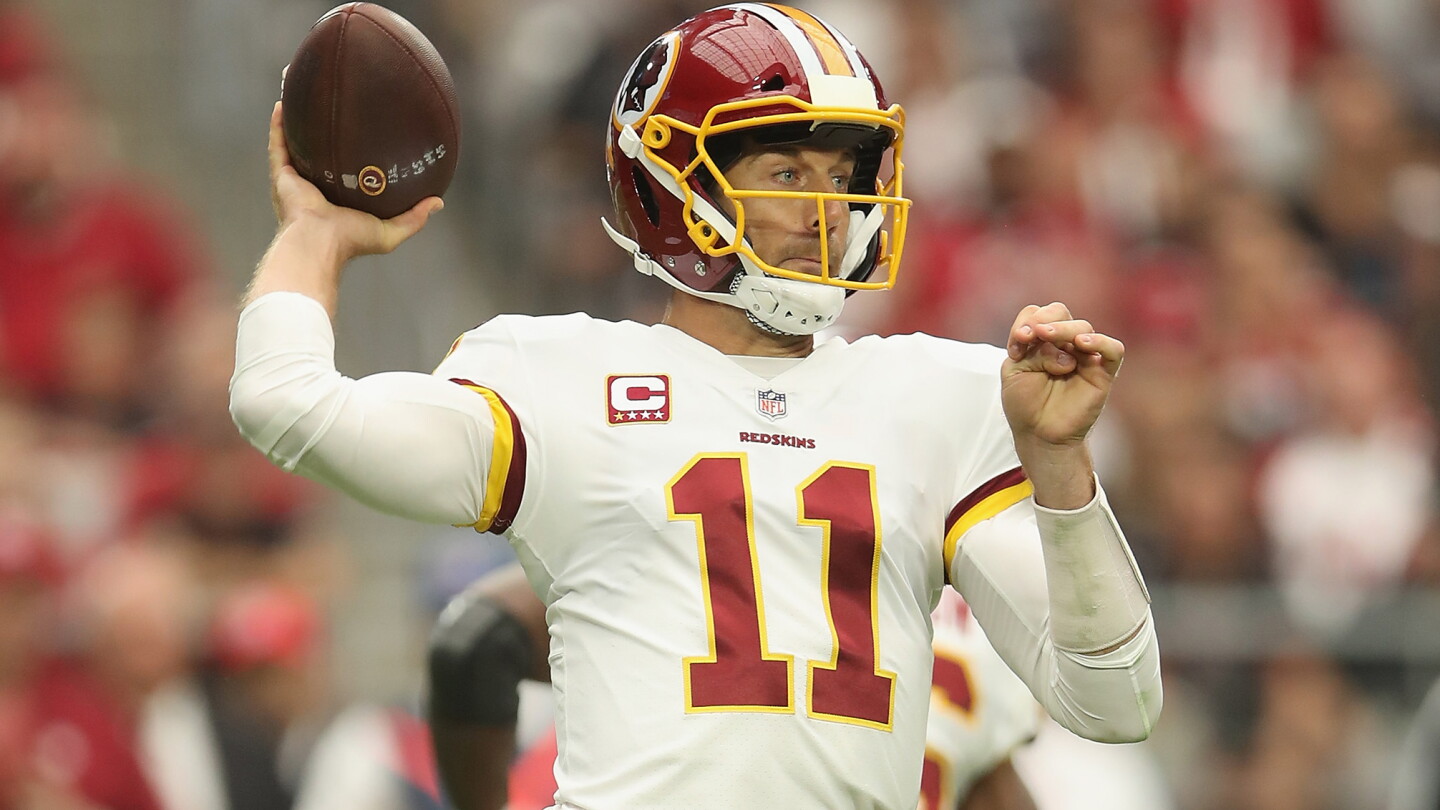
There’s so much to love about sports. The drama, the excitement, the way a great team can bring a community together (think New Orleans after Hurricane Katrina or Boston after the Marathon bombings), the sheer spectacle of seeing freak athletes perform Herculean feats on the biggest stages (the football world is still buzzing from Monday night’s Chiefs/Rams masterpiece). But one thing I could probably do without are the devastating, career-threatening injuries that grace our television screens every so often.
And I’m not talking about the sprained ankles or hamstring pulls we witness on a weekly basis. Those are the occupational hazards that, while inconvenient, are the collateral damage of playing competitive sports at the highest level. But there have been a handful of injuries in my lifetime that have shaken me to my core. I remember where I was when Gordon Hayward’s ankle bent the wrong away. The surreal hush that fell over Heinz Field when Ryan Shazier was carted off is another memory that still haunts me. Kevin Ware, Shaun Livingston and Zach Miller have all endured similar fates. And now Alex Smith can add his name to that depressing list.
After having his leg trampled by J.J. Watt and Kareem Jackson in Sunday’s loss to Houston, we knew Smith wasn’t getting back up. Smith went for X-rays, but they were hardly necessary. Everyone watching could see Smith’s season was over. The 34-year-old is reportedly looking at an 8-10 month recovery, putting his status in question for the start of next season. Even if Smith makes it back on the early end of that timeframe, a return to pre-injury form seems highly unlikely. While he’s never been the most daring downfield marksmen, Smith has proven to be a capable scrambler throughout his NFL tenure, amassing a respectable 2,601 rushing yards on 570 lifetime carries. Fourteen years into his career and coming off a gut-wrenching injury, Smith’s days of making plays with his legs are probably over.
[[ad:athena]]
In a career full of twists and turns, overcoming an injury of this magnitude will be the hardest challenge Smith has faced yet. And given his age and the severity of the injury, his return can’t be taken for granted. Smith waved to the crowd as he was carted off the field on Sunday and I’m sure many wondered if that was the veteran’s way of saying goodbye, a simple farewell gesture signifying the end of a long and often misunderstood career. Now seems like as good a time as any to take inventory of Smith’s 14 seasons, which have run the gamut from highly successful to deeply disappointing. If this is it for Smith, a very real possibility given Sunday’s events, what will his legacy be? Will he be remembered as a respected, long-tenured NFL starter or a chronic underachiever who failed to live up to his first-round billing?
Fair or not, Smith has always been viewed through a narrow lens. The 49ers put enormous expectations on Smith by drafting him first overall in 2005. And if that wasn’t a heavy enough burden, consider that San Francisco chose Smith instead of native Californian Aaron Rodgers, who fell all the way to the Packers with the 24th pick. It’s easy to imagine an alternate history where the Niners drafted Rodgers instead of Smith. Would they have been a juggernaut with Rodgers? It’s the type of unanswerable hypothetical that I’m sure gnaws at Niners fans to this day.
Editor’s Note: If you love Fantasy Football you have to be playing on DRAFT. It’s daily fantasy football snake drafts instead of salary caps. All the fun of season long drafts but with no management and they last for just one week. They take minutes to complete and there’s even auction drafts! No more setting lineups or constantly worrying about pros, just draft and win! Right now DRAFT is giving Rotoworld readers an exclusive FREE entry into a real money draft when you make your first deposit! Here’s the link
In an era of interception-prone gunslingers, Smith’s clean, no frills brand of football carries significant value. Game manager is often used as a derogatory term in football circles, a label worn by cerebral players with limited natural talent. And for Smith, that stigma has been hard to escape. It seems that whenever we describe a conservative, by-the-book quarterback incapable of throwing deep, we inevitably compare him to Smith, the league’s standard-bearer for short-yardage wizardry. And sure, Smith has made a career out of check-downs and screen passes, but should that diminish his worth? Is Smith a lesser quarterback because he didn’t subscribe to the reckless, field-stretching philosophy of his colleagues, or because his YouTube highlight reel hasn’t garnered as many clicks as Cam Newton’s? There’s no sizzle to Smith’s game. He’s a meat and potatoes quarterback, a bland, non-star with few defining characteristics. Let’s put it this way—nobody grew up with Alex Smith posters on their wall. But in a results-oriented league, shouldn’t substance trump flash?
Smith’s numbers won’t knock your socks off, but scouring through his Pro Football Reference page, you’ll find that he’s been a pretty decent quarterback for the better part of a decade. Since 2011, Smith has compiled a superb 94.0 passer rating while contributing 142 touchdowns against just 48 interceptions. You can poke holes in his game—Smith has only cleared the 4,000-yard barrier once and his career-high of 26 touchdowns has already been surpassed by three quarterbacks this season including his replacement in Kansas City, Patrick Mahomes. But his high quarterback rating and elite touchdown-to-interception ratio still paint a complementary picture of one of the game’s most accurate and consistently high-achieving field generals. And these aren’t empty calories either. Smith has seen postseason action in five of his last seven seasons. You can knock Smith for his dink-and-dunk proclivities or his perceived lack of arm strength, but you can’t say he doesn’t win football games.
But let’s not mistake competence for excellence because Smith’s resume, though strong in certain areas, is lacking in others. Think of the stops he’s made throughout his career. On San Francisco, he ceded his starting job to Colin Kaepernick, who proceeded to lead the 49ers to their first Super Bowl appearance in nearly two decades. And even after multiple playoff appearances in Kansas City, the Chiefs still felt they could do better, trading up to nab Patrick Mahomes with the 10th overall pick in last year’s draft. Following a career-best season in 2017, the Chiefs promptly kicked Smith to the curb, trading him to Washington for cornerback Kendall Fuller and a third-round pick. Always the groomsmen, never the groom. Smith is the king of not quite, the Rodney Dangerfield of NFL quarterbacks, never getting the respect he deserves.
Smith’s history of being replaced by younger, better quarterbacks no doubt complicates his legacy, but that’s not his biggest shortcoming. For all his regular season accolades, Smith has never done much of anything in the playoffs, losing five of his seven career postseason starts. We’ve seen what postseason success can do for a quarterback. Eli Manning will likely be enshrined in Canton on the strength of his two Super Bowl runs while Joe Flacco parlayed his near-perfect 2012 postseason into a lucrative, six-year extension. Neither have been particularly effective regular-season quarterbacks, but playoff victories immortalized them. Smith doesn’t have that luxury to fall back on.
Despite the four-year, $91 million mega-deal he penned this offseason, Smith was never the Redskins’ long-term fix. And now that he’s been shelved by a potentially career-threatening injury, Washington needs to be thinking long and hard about its succession plan at quarterback. Colt McCoy isn’t it. Starting-caliber quarterbacks hardly ever hit the open market, except for the one they inexplicably just let go, Kirk Cousins. The Redskins’ handling of Cousins was beyond baffling and now that Smith’s career is in jeopardy, they’re paying the price for letting him slip through the cracks. When you find an upper-echelon starter like Cousins, you put a ring on it, but Washington’s finicky front office couldn’t commit and now he’s doing his bidding for the Vikings.
Many assumed the drop-off from Smith to McCoy would be negligible, but Thursday’s debacle in Dallas proved that filling Smith’s shoes isn’t as easy as it looks. McCoy crumbled like Pompeii, committing three interceptions (something Smith hasn’t done since the opening week of 2014) as the Cowboys ran away with a decisive Thanksgiving victory. Dallas isn’t the easiest defensive assignment, especially for a quarterback making his first start in four years, but at no point did McCoy look like he was capable of leading the Redskins to the postseason. It doesn’t help that McCoy’s supporting cast is a rapidly declining Adrian Peterson, a tight end (Jordan Reed) whose injury log could fill a college textbook and a receiver corps built on spare parts like Maurice Harris, Trey Quinn and failed first-round pick Josh Doctson. The Redskins could probably benefit from a complete overhaul on offense, but now that the trade deadline has passed, they’ll have to make do with underwhelming pieces like Kapri Bibbs and the somehow-not-retired-yet Vernon Davis. Untimely injuries to Jamison Crowder and Chris Thompson haven’t helped matters. Losers of two straight, the fading Redskins are going to need some help down the stretch.
Perhaps it’s too early to close the book on Smith. Quarterbacks seem to be having longer shelf lives than ever. Drew Brees is having one of his best seasons at 39 while Tom Brady was the league’s MVP last year at age 40. But neither have endured an injury like the one Smith just suffered. In a bizarre coincidence, Smith suffered his broken leg on the same day Joe Theismann did 33 years earlier. Theismann, who was also a Redskin when his injury occurred, would never play another NFL snap. Smith can only hope for a different fate.
What’s the fantasy spin?
McCoy can’t compete at the level of Smith, though luckily Washington’s rest-of-season schedule is relatively light with upcoming games against the Eagles (4-6), Giants (3-7) and Jaguars (3-7), among others. Those aren’t necessarily easy defensive matchups, but they’re games the Redskins are at least capable of winning. With McCoy manning the controls, I’d expect the Redskins to feature their running game, which means we can expect a heavy dose of Adrian Peterson down the stretch. Peterson has grown increasingly one-dimensional in his advanced age, rarely factoring in the passing game. That’s fine when Washington has the lead, but when the Redskins are playing from behind as they did Thursday in Dallas, Peterson’s usage takes a big hit. There may not be a more game-script-dependent back in football than Peterson—he’s averaged a ludicrous 104.8 rushing yards per game in victories while slumping to a dismal 23.5 yards per game in the Redskins’ five losses. While McCoy’s ascension to the starting quarterback role is a downgrade for Washington’s offense as a whole, it’s actually been a positive development for Jordan Reed, who has surprisingly had his two best games with McCoy under center. McCoy will be hard to trust for fantasy purposes, though as a low-cost punt play on DFS sites, he’s someone to at least consider.